 |
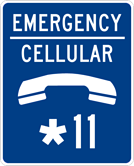 |
EMERGENCY CELLULAR TELEPHONE SIGN (*11) (D12-14) (a) Justification. The Emergency Cellular Telephone Sign (*11) (D12-14) shall be used to inform motorists of the availability of an emergency cellular telephone number which will connect motorists with the Turnpike Traffic Operations Center. (b) Placement. This sign should be located along the mainline upon entering the Turnpike from an interchange or service plaza and within all emergency pull-off, emergency stopping, and no parking areas. (c) Size. The standard size D12-14 sign shall be 48 inches by 60 inches for the mainline Turnpike. The 30 inches by 36 inches size shall only be used for emergency pull-off, emergency stopping, and no parking areas. |
|
 |
EMERGENCY CELLULAR SIGN (*11) (D12-14A) (a) Justification. The Emergency Cellular Sign (*11) (D12-14A) shall be used within an emergency pull-off in a construction zone to inform motorists of the availability of an emergency cellular telephone number which will connect motorists with the Turnpike Traffic Operations Center. (b) Placement. The sign should be located at all emergency pull-off locations during stage construction. |
|
 |
EMERGENCY PULL-OFF IDENTIFICATION SIGN (EPO ID) The Emergency Pull-Off Identification Sign (EPO ID) shall be used to designate emergency pull-off locations within a work zone to emergency responders. The letter and number should be changed to indicate direction of travel and number identification for each emergency pull-off. |
|
 |
REMOVE SUNGLASSES SIGN (G20-10-2A) (a) Justification. The Remove Sunglasses Sign (G20-10-2A) shall be in advance of all tunnels to advise motorists to remove their sunglasses prior to entering the tunnel. (b) Placement. This sign should be located approximately 3/4 mile prior to entering the tunnel. |
|
 |
TURN ON HEADLIGHTS SIGN (G20-10A) (a) Justification. The Turn On Headlights Sign (G20-10A) shall be used in advance of all tunnels to advise motorists to turn on their headlights prior to entering the tunnel. (b) Placement. This sign should be located approximately 1/2 mile prior to entering the tunnel. |
|
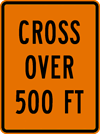 |
CROSSOVER 500 FEET SIGN (MPT-01) The Crossover 500 Feet Sign (MPT-01) shall be used to alert motorists that the travel lane will be shifting to the right or left in approximately 500 feet. This sign is used outside of the tunnels during maintenance operations where one tunnel is closed and both directions of travel are utilizing the other tunnel. |
|
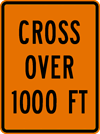 |
CROSSOVER 1000 FEET SIGN (MPT-03) The Crossover 1000 Feet Sign (MPT-03) shall be used to alert motorists that the travel lane will be shifting to the right or left in approximately 1000 feet. This sign is used in work zones where traffic from one direction is being shifted onto the opposing direction due to construction closing the original direction. |
|
 |
EXIT (45 DEGREE ARROW) SIGN (MPT-06) The Exit (45 Degree Arrow) Sign (MPT-06) shall be used in work zones to indicate a point where traffic is to exit the mainline roadway onto an interchange ramp. |
|
 |
GAS AND FOOD (45 DEGREE ARROW) SIGN (MPT-08) The Gas and Food (45 Degree Arrow) Sign (MPT-08) shall be used in work zones to indicate a point where traffic is to exit the mainline roadway onto a service plaza ramp. |
|
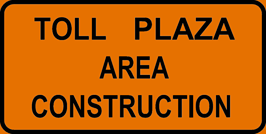 |
TOLL PLAZA AREA CONSTRUCTION SIGN (MPT-10) (a) Justification. The Toll Plaza Area Construction Sign (MPT-10) shall be used to advise motorists approaching a toll plaza that there is a work zone in operation. (b) Placement. This sign should be located approximately 500 feet before a Lane Closed Ahead Sign (PTC-LCA). If multiple ramps provide entrance to the toll plaza, MPT-10 signs shall be placed on each ramp as necessary |
|
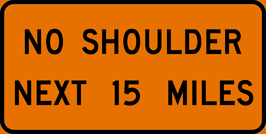 |
NO SHOULDER NEXT (___) MILES SIGN (MPT-31) (a) Justification. The No Shoulder Next (___) Miles Sign (MPT-31) shall be used to alert motorists that the shoulder is closed for the length indicated on the sign. (b) Placement. This sign should be positioned approximately 500 feet before the start of the closure and should only be used for work zones over one mile in length. |
|
 |
SHOULDER CLOSED SIGN (MPT-34) (a) Justification. The Shoulder Closed Sign (MPT-34) shall be used to alert motorists that the shoulder ahead is closed due to short-term mobile maintenance activities such as litter removal or mowing. (b) Placement. This sign should be mounted on the shadow vehicle that shall be positioned approximately 250 feet before the start of the work zone. |
|
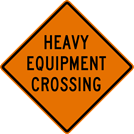 |
HEAVY EQUIPMENT CROSSING SIGN (MPT-36) (a) Justification. The Heavy Equipment Crossing Sign (MPT-36) may be used in advance of a temporary construction entrance to alert motorists of slow moving vehicles crossing the roadway. (b) Placement. This sign should be placed approximately 650 feet prior to the crossing. |
|
 |
CONSTRUCTION VEHICLE STAY BACK PLAQUE (MPT-37) The Construction Vehicle Stay Back Plaque (MPT-37) shall be mounted on the rear of construction vehicles to alert motorists to keep a safe distance. |
|
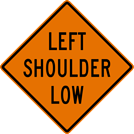 |
LEFT SHOULDER LOW SIGN (MPT-38) (a) Justification. The Left Shoulder Low Sign (MPT-38) shall be used to alert motorists where there is a height difference between the pavement surface of the roadway and the median shoulder. (b) Placement. This sign should be placed approximately 2,000 feet prior to the start of the pavement differential and be located every half mile through it as well as on entrance ramps to the section with the pavement differential. |
|
 |
ACCESS GATE MILEPOST SIGN (PTC-AGMP) (a) Justification. The Access Gate Milepost Sign (PTC-AGMP) shall be used to provide a means of identifying the location of the access gate and to aid in Turnpike emergency response. (b) Placement. This sign shall be located on both sides of the access gate at all access gate locations. |
|
 |
DO NOT STOP SIGN (PTC-DNS) (a) Justification. The Do Not Stop Sign (PTC-DNS) shall be used to advise motorists not to stop while traveling through the express E-ZPass lanes at a mainline toll plaza and prior to a tunnel. (b) Placement. This sign should be erected on the shoulder and median prior to entering the express E-ZPass tolling area of the mainline toll plaza and prior to a tunnel. |
|
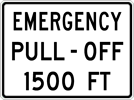 |
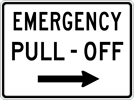
EMERGENCY PULL-OFF DISTANCE SIGN (PTC-EPA) (a) Justification. The Emergency Pull-Off Distance Sign (PTC-EPA) shall be used to advise motorists of the location of an upcoming emergency pull-off area. (b) Placement. This sign should be located approximately 1,500 feet prior to the beginning of the emergency pull-off area. Except where site conditions prevent placement of the 1,500 feet sign, the distance shall be rounded to the closest 500 feet, as approved by Traffic Engineering and Operations. The distance on the sign shall be limited to a maximum distance of 3,000 feet. |
|
 |
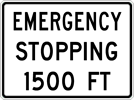
EMERGENCY PULL-OFF ARROW SIGN (PTC-EPB) (a) Justification. The Emergency Pull-Off Arrow Sign (PTC-EPB) shall be used to advise motorists of the location of the entrance to the emergency pull-off area. (b) Placement. This sign should be located a maximum distance of 150 feet prior to the beginning of the emergency pull-off area. |
|
 |
EMERGENCY STOPPING DISTANCE SIGN (PTC-ESA) (a) Justification. The Emergency Stopping Distance Sign (PTC-ESA) shall be used to advise motorists of the location of an upcoming emergency stopping area. (b) Placement. This sign should be located approximately 1,500 feet prior to the beginning of the emergency stopping area. Except where site conditions prevent placement of the 1,500 feet sign, the distance shall be rounded to the closest 500 feet, as approved by Traffic Engineering and Operations. The distance on the sign shall be limited to a maximum distance of 3,000 feet. |
|
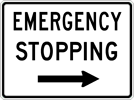 |
EMERGENCY STOPPING ARROW SIGN (PTC-ESB) (a) Justification. The Emergency Stopping Arrow Sign (PTC-ESB) shall be used to advise motorists of the location of the entrance to the emergency stopping area. (b) Placement. This sign should be located a maximum distance of 150 feet prior to the beginning of the emergency stopping area. |
|
 |
PENNSYLVANIA TURNPIKE KEYSTONE SIGN (PTC-KEY) (a) Justification. The Pennsylvania Turnpike Keystone Sign (PTC-KEY) shall be installed along the state or local route to direct motorists to the Pennsylvania Turnpike entrance. The sign should be used in conjunction with an Interstate Route Marker (M1-1) or Pennsylvania Turnpike Marker (M1-5A). (b) Placement. This sign should be located along the state or local route prior to the Pennsylvania Turnpike Entrance. |
|
.png "Pennsylvania Turnpike Keystone Left Arrow Sign (PTC-KEY(L))") |
PENNSYLVANIA TURNPIKE KEYSTONE LEFT ARROW SIGN (PTC-KEY(L)) (a) Justification. The Pennsylvania Turnpike Keystone Left Arrow Sign (PTC-KEY(L)) shall be installed along the state or local route to direct motorists to the Pennsylvania Turnpike entrance. (b) Placement. This sign should be located at the intersection for the Pennsylvania Turnpike Entrance and the state or local route where a left turn must be made to enter the Pennsylvania Turnpike. |
|
.png "Pennsylvania Turnpike Keystone Left Arrow Distance Sign (PTC-KEY(LD))") |
PENNSYLVANIA TURNPIKE KEYSTONE LEFT ARROW DISTANCE SIGN (PTC-KEY(LD)) (a) Justification. The Pennsylvania Turnpike Keystone Left Arrow Distance Sign (PTC-KEY(LD)) shall be installed along the state or local route to direct and advise motorists of the distance to the Pennsylvania Turnpike entrance. (b) Placement. This sign should be located at the intersection of two state or local routes where a left turn must be made and indicate the distance (in miles) to the Pennsylvania Turnpike entrance. |
|
.png "Pennsylvania Turnpike Keystone Right Arrow Sign (PTC-KEY(R))") |
PENNSYLVANIA TURNPIKE KEYSTONE RIGHT ARROW SIGN (PTC-KEY(R)) (a) Justification. The Pennsylvania Turnpike Keystone Right Arrow Sign (PTC-KEY(R)) shall be installed along the state or local route to direct motorists to the Pennsylvania Turnpike entrance. (b) Placement. This sign should be located at the intersection for the Pennsylvania Turnpike Entrance and the state or local route where a right turn must be made to enter the Pennsylvania Turnpike. |
|
.png "Pennsylvania Turnpike Keystone Right Arrow Distance Sign (PTC-KEY(RD))") |
PENNSYLVANIA TURNPIKE KEYSTONE RIGHT ARROW DISTANCE SIGN (PTC-KEY(RD)) (a) Justification. The Pennsylvania Turnpike Keystone Right Arrow Distance Sign (PTC-KEY(RD)) shall be installed along the state or local route to direct and advise motorists of the distance to the Pennsylvania Turnpike entrance. (b) Placement. This sign should be located at the intersection of two state or local routes where a right turn must be made and indicate the distance (in miles) to the Pennsylvania Turnpike entrance. |
|
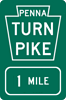 |
PENNSYLVANIA TURNPIKE TRAILBLAZER (1 MILE) (PTC-KEY1) (a) Justification. The Pennsylvania Turnpike Trailblazer (1 Mile) (PTC-KEY1) shall be used to advise motorists of the distance (1 Mile) to the Pennsylvania Turnpike entrance. (b) Placement. This sign should be located along the state or local route approximately one mile prior to the Pennsylvania Turnpike entrance. |
|
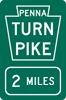 |
PENNSYLVANIA TURNPIKE TRAILBLAZER (PTC-KEY2) (a) Justification. The Pennsylvania Turnpike Trailblazer (PTC-KEY2) shall be used to advise motorists of the distance (in miles) to the Pennsylvania Turnpike entrance. (b) Placement. This sign should be located along the state or local route approximately each mile between two and five miles prior to the Pennsylvania Turnpike entrance. |
|
 |
PENNSYLVANIA TURNPIKE ADVANCE 90 DEGREE LEFT TURN TRAILBLAZER (PTC-KEY3L) (a) Justification. The Pennsylvania Turnpike Advance 90 Degree Left Turn Trailblazer (PTC-KEY3L) shall be used in advance of a left turn which must be made to follow the indicated route to the Pennsylvania Turnpike entrance. (b) Placement. This sign should be located along the state or local route in advance of the Pennsylvania Turnpike 90 Degree Left Turn Trailblazer (PTC-KEY5L) prior to the Pennsylvania Turnpike entrance. |
|
 |
PENNSYLVANIA TURNPIKE ADVANCE 90 DEGREE RIGHT TURN TRAILBLAZER (PTC-KEY3R) (a) Justification. The Pennsylvania Turnpike Advance 90 Degree Right Turn Trailblazer (PTC-KEY3R) shall be used in advance of a right turn which must be made to follow the indicated route to the Pennsylvania Turnpike entrance. (b) Placement. This sign should be located along the state or local route in advance of the Pennsylvania Turnpike 90 Degree Right Turn Trailblazer (PTC-KEY5R) prior to the Pennsylvania Turnpike entrance. |
|
 |
PENNSYLVANIA TURNPIKE ADVANCE 45 DEGREE LEFT TURN TRAILBLAZER (PTC-KEY4L) (a) Justification. The Pennsylvania Turnpike Advance 45 Degree Left Turn Trailblazer (PTC-KEY4L) shall be used in advance of a left turn which must be made to follow the indicated route to the Pennsylvania Turnpike entrance. (b) Placement. This sign should be located along the state or local route in advance of the Pennsylvania Turnpike 45 Degree Left Turn Trailblazer (PTC-KEY6L) prior to the Pennsylvania Turnpike entrance. |
|
 |
PENNSYLVANIA TURNPIKE ADVANCE 45 DEGREE RIGHT TURN TRAILBLAZER (PTC-KEY4R) (a) Justification. The Pennsylvania Turnpike Advance 45 Degree Right Turn Trailblazer (PTC-KEY4R) shall be used in advance of a right turn which must be made to follow the indicated route to the Pennsylvania Turnpike entrance. (b) Placement. This sign should be located along the state or local route in advance of the Pennsylvania Turnpike 45 Degree Right Turn Trailblazer (PTC-KEY6R) prior to the Pennsylvania Turnpike entrance. |
|
 |
PENNSYLVANIA TURNPIKE 90 DEGREE LEFT TURN TRAILBLAZER (PTC-KEY5L) (a) Justification. The Pennsylvania Turnpike 90 Degree Left Turn Trailblazer (PTC-KEY5L) shall be used at an intersection where a left turn must be made to follow the indicated route to the Pennsylvania Turnpike entrance. (b) Placement. This sign should be located along the state or local route prior to the Pennsylvania Turnpike entrance. |
|
 |
PENNSYLVANIA TURNPIKE 90 DEGREE RIGHT TURN TRAILBLAZER (PTC-KEY5R) (a) Justification. The Pennsylvania Turnpike 90 Degree Right Turn Trailblazer (PTC-KEY5R) shall be used at an intersection where a right turn must be made to follow the indicated route to the Pennsylvania Turnpike entrance. (b) Placement. This sign should be located along the state or local route prior to the Pennsylvania Turnpike entrance. |
|
 |
PENNSYLVANIA TURNPIKE 45 DEGREE LEFT TURN TRAILBLAZER (PTC-KEY6L) (a) Justification. The Pennsylvania Turnpike 45 Degree Left Turn Trailblazer (PTC-KEY6L) shall be used at an intersection where a left turn must be made to follow the indicated route to the Pennsylvania Turnpike entrance. (b) Placement. This sign should be located along the state or local route prior to the Pennsylvania Turnpike entrance. |
|
 |
PENNSYLVANIA TURNPIKE 45 DEGREE RIGHT TURN TRAILBLAZER (PTC-KEY6R) (a) Justification. The Pennsylvania Turnpike 45 Degree Right Turn Trailblazer (PTC-KEY6R) shall be used at an intersection where a right turn must be made to follow the indicated route to the Pennsylvania Turnpike entrance. (b) Placement. This sign should be located along the state or local route prior to the Pennsylvania Turnpike entrance. |
|
 |
PENNSYLVANIA TURNPIKE STRAIGHT THROUGH TRAILBLAZER (PTC-KEY7) (a) Justification. The Pennsylvania Turnpike Straight Through Trailblazer (PTC-KEY7) shall be used at an intersection where a straight through movement must be made to follow the indicated route to the Pennsylvania Turnpike entrance. (b) Placement. This sign should be located along the state or local route prior to the Pennsylvania Turnpike entrance. |
|
 |
KEEP MOVING SIGN (PTC-KM) (a) Justification. The Keep Moving Sign (PTC-KM) shall be used to advise motorists to keep moving through the Cashless Tolling Toll Plaza lanes. (b) Placement. This sign shall be installed on all toll plaza islands at a Cashless Tolling Toll Plaza. |
|
 |
PRIVATE PROPERTY NO TRESPASSING SIGN (PTC-LAW) (a) Justification. The Private Property No Trespassing Sign (PTC-LAW) shall be installed to advise motorists of Pennsylvania Turnpike Commission private property and that violators are subject to penalties provided by law. The PTC-LAW sign may be erected alone or in conjunction with the Private Roadway Sign (PTC-PR). (b) Placement. This sign should be located on the right side on the PTC right-of-way adjacent to state or local routes facing vehicles that are entering from the state or local route. When used in conjunction with the PTC-PR sign, the sign shall be mounted below the PTC-PR sign on the right side. |
|
 |
LANE CLOSED SIGN (PTC-LC) (a) Justification. The Lane Closed Sign (PTC-LC) shall be used to indicate that a designated lane in the Toll Plaza is closed. (b) Placement. The sign shall be installed at all Toll Plaza lanes. |
|
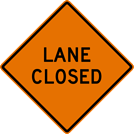 |
LANE CLOSED SIGN (PTC-LC) (a) Justification. The Lane Closed Sign (PTC-LC) shall be used to advise motorists at the beginning of a work zone at a toll plaza that one or multiple lanes are closed. (b) Placement. This sign should be located approximately 50 feet from the start of the work zone. |
|
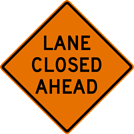 |
LANE CLOSED AHEAD SIGN (PTC-LCA) (a) Justification. The Lane Closed Ahead Sign (PTC-LCA) shall be used to advise motorists approaching a work zone at a toll plaza that one or multiple lanes are closed. (b) Placement. This sign should be located approximately 500 feet before the start of the work zone. If multiple ramps provide entrance to the toll plaza, PTC-LCA signs shall be placed on each ramp as necessary |
|
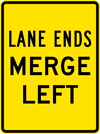 |
LANE ENDS MERGE LEFT SIGN (PTC-LEML) (a) Justification. The Lane Ends Merge Left Sign (PTC-LEML) shall be authorized for use as a supplement to the Pavement Width Transition - Right Lane Ends Sign (W4-2R or PTC-PWTR). (b) Placement. This sign should be erected for narrow medians, where the total width of the median is less than 15 feet. |
|
 |
LANE ENDS MERGE RIGHT SIGN (PTC-LEMR) (a) Justification. The Lane Ends Merge Right Sign (PTC-LEMR) shall be authorized for use as a supplement to the Pavement Width Transition - Left Lane Ends Sign (W4-2L or PTC-PWTL). (b) Placement. This sign should be erected for narrow medians, where the total width of the median is less than 15 feet. |
|
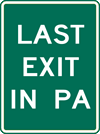 |
LAST EXIT IN PA SIGN (PTC-LEPA) (a) Justification. The Last Exit in PA Sign (PTC-LEPA) shall be used to advise motorists that they are approaching the last exit on the Pennsylvania Turnpike. (b) Placement. The sign shall be installed on the 1 Mile Interchange Advance Guide sign for the last exit on the Pennsylvania Turnpike prior to entering a neighboring state. |
|
 |
MERGE RIGHT SIGN (PTC-MR) (a) Justification. The Merge Right Sign (PTC-MR) shall be used to warn motorists that merging movements may be encountered from the right when two roadways converge and no turning conflicts occur. (b) Placement. This sign should be erected on the median after exiting the express E-ZPass tolling area of the mainline toll plaza. |
|
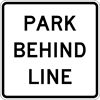 |
PARK BEHIND LINE SIGN (PTC-PBL) (a) Justification. The Park Behind Line Sign (PTC-PBL) shall be installed to advise motorists to park behind the line for safety. This sign shall be located within all emergency pull-off areas. Additional PTC-PBL signs may be installed if the length along the back of the pull-off area warrants. (b) Placement. Place signs such that a maximum spacing of 500 feet between PTC-PBL signs is maintained. |
|
 |
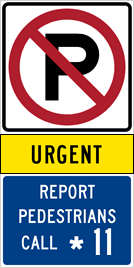
URGENT REPORT PEDESTRIANS CALL (*11) SIGN (PTC-PED1) (a) Justification. The Urgent Report Pedestrians Call (*11) Sign (PTC-PED1) shall be used to advise motorists if they witness a pedestrian along the Turnpike in this area to dial *11 to report the incident. (b) Placement. When used, the PTC-PED1 sign should be installed in advance of an area where pedestrians are prohibited. |
|
 |
URGENT REPORT PEDESTRIANS CALL (*11) SYMBOL SIGN (PTC-PED2) (a) Justification. The Urgent Report Pedestrians Call (*11) Symbol Sign (PTC-PED2) shall be used to advise motorists if they witness a pedestrian along the Turnpike in this area to dial *11 to report the incident. (b) Placement. When used, the PTC-PED2 sign should be installed in advance of an area where pedestrians are prohibited. |
|
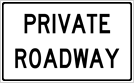 |
PRIVATE ROADWAY SIGN (PTC-PR) (a) Justification. The Private Roadway Sign (PTC-PR) shall be installed to advise motorists that the Pennsylvania Turnpike Commission is a private roadway. (b) Placement. This sign should be located on an access ramp on PTC right of way adjacent to state or local routes facing vehicles that are entering from the state or local route. (b) Size. The standard size of the PTC-PR sign shall be 60 inches by 30 inches. |
|
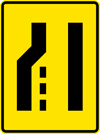 |
PAVEMENT WIDTH TRANSITION-LEFT LANE ENDS SIGN (PTC-PWTL) (a) Justification. The Pavement Width Transition-Left Lane Ends Sign (PTC-PWTL) shall be authorized for use to give advance warning of the termination of the left lane of pavement. (b) Placement. This sign should be erected for narrow medians, where the total width of the median is less than 15 feet. It shall not be used in advance of the end of an acceleration lane. |
|
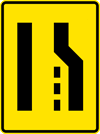 |
PAVEMENT WIDTH TRANSITION-RIGHT LANE ENDS SIGN (PTC-PWTR) (a) Justification. The Pavement Width Transition-Right Lane Ends Sign (PTC-PWTR) shall be authorized for use to give advance warning of the termination of the right lane of pavement. (b) Placement. This sign should be erected for narrow medians, where the total width of the median is less than 15 feet. This sign should be used in advance of the termination of a truck climbing lane. It shall not be used in advance of the end of an acceleration lane. |
|
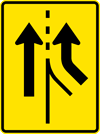 |
RIGHT ADDED LANE SIGN (PTC-RAL) (a) Justification. The Right Added Lane Sign (PTC-RAL) may be used for narrow medians in advance of a point where a lane is added on the right and merging traffic movements are not required. When used, this sign should be erected for narrow medians in advance of the point of convergence and should be visible from both roadways or a separate sign should be placed on each roadway. (b) Placement. This sign should be erected for narrow medians, where the total width of the median is less than 15 feet. |
|
 |
REPORT HUMAN TRAFFICKING SIGN (PTC-RHC) (a) Justification. The Report Human Trafficking Sign (PTC-RHC) shall be used to inform motorists of the availability of a report human trafficking telephone number which will connect motorists with the Turnpike Traffic Operations Center. (b) Placement. This sign should be located at all emergency pull-off and service plaza areas. |
|
 |
STATE POLICE DISTANCE SIGN (PTC-SPD) (a) Justification. The State Police Distance Sign (PTC-SPD) shall be used with the State Police Symbol Sign (D9-14) to advise motorists of the distance to the Pennsylvania State Police (Troop T) barracks. (b) Placement. This sign shall be located approximately at one-quarter mile, one-half mile, and one mile prior to the State Police barracks. When used in conjunction with the D9-14, the sign shall be mounted below the D9-14 sign. |
|
 |
STATE POLICE NEXT EXIT SIGN (PTC-SPNE) (a) Justification. The State Police Next Exit Sign (PTC-SPNE) shall be used with the State Police Symbol Sign (D9-14) to advise motorists of to take the next exit to get to the Pennsylvania State Police barracks. (b) Placement. When used, this sign should be located along the mainline Turnpike prior to the exit ramp. When used in conjunction with the D9-14, the sign shall be mounted below the D9-14 sign. |
|
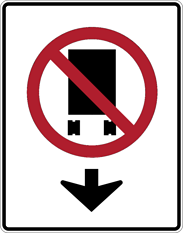 |
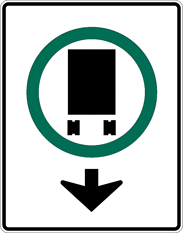
TRUCKS AND BUSES RIGHT LANE ONLY SYMBOL SIGN (PTC-TBRO) (a) Justification. The Trucks Buses Prohibited Overhead Symbol Sign (PTC-TBP) may be used in construction zones where it is required to restrict trucks and buses from a certain lane because of insufficient lane width or shoulder depth. (b) Placement. When used, this sign should be erected within construction zones above certain lanes that trucks and buses are prohibited from using. |
|
 |
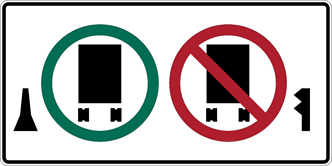
TRUCKS BUSES ALLOWED OVERHEAD SYMBOL SIGN (PTC-TBA) (a) Justification. The Trucks Buses Allowed Overhead Symbol Sign (PTC-TBA) may be used in construction zones where it is required to restrict trucks and buses to a certain lane because of insufficient lane width or shoulder depth. (b) Placement. When used, this sign should be erected in within construction zones above certain lanes that trucks and buses are required to use. |
|
 |
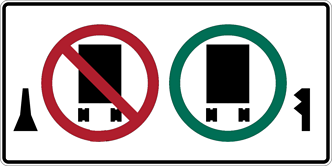
TRUCKS AND BUSES LEFT LANE ONLY SYMBOL SIGN (PTC-TBLO) (a) Justification. The Trucks and Buses Left Lane Only Symbol Sign (PTC-TBLO) may be used in construction zones where it is required to restrict trucks and buses to the left lane because of insufficient lane width or shoulder depth. (b) Placement. When used, this sign should be erected in advance of and within construction zones where trucks and buses are required to stay in the left lane only. |
|
 |
TRUCKS AND BUSES RIGHT LANE ONLY SYMBOL SIGN (PTC-TBRO) (a) Justification. The Trucks and Buses Right Lane Only Symbol Sign (PTC-TBRO) may be used in construction zones where it is required to restrict trucks and buses to the right lane because of insufficient lane width or shoulder depth. (b) Placement. When used, this sign should be erected in advance of and within construction zones where trucks and buses are required to stay in the right lane only. |
|
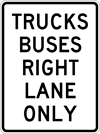 |
TRUCKS BUSES RIGHT LANE ONLY SIGN (PTC-TBRLO) (a) Justification. The Trucks Buses Right Lane Only Sign (PTC-TBRLO) may be used to exclude trucks and buses from certain travel lanes on the Turnpike or in construction zones to keep trucks and buses off lanes that are not designed or constructed to carry these higher loads. (b) Placement. This sign should be erected for narrow medians, where the total width of the median is less than 15 feet. The word "LEFT" may be substituted for the word "RIGHT" where applicable. |
|
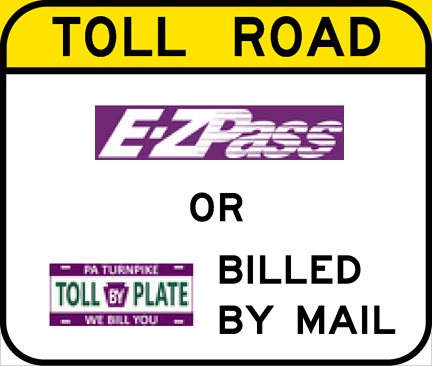 |
TOLL ROAD PAYMENT OPTIONS SIGN (PTC-TRPO) (a) Justification. The Toll Road Payment Options Sign (PTC-TRPO) shall be installed to advise motorists that the road ahead is tolled and the playment options available to pay the toll. (b) Placement. This sign should be located along interchange entrance ramps used to enter the Pennsylvania Turnpike roadway network. |
|
 |
TUNNEL SIGN (PTC-TUNL) (a) Justification. The Tunnel Sign (PTC-TUNL) shall be used to warn motorists that they are approaching a tunnel. The PTC-TUNL sign shall be erected in conjunction with the Distance Ahead Plaque (W16-103P). (b) Placement. This sign shall be located one mile prior to the tunnel. |
|
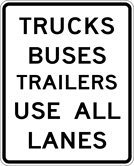 |
TRUCKS BUSES TRAILERS USE ALL LANES SIGN (PTC-UALL) (a) Justification. The Trucks Buses Trailers Use All Lanes Sign (PTC-UALL) shall be used to advise all trucks, buses, and vehicles with trailers to use all lanes while traveling through the Express E-ZPass lanes at mainline toll plazas in a three-lane section. (b) Placement. This sign shall be erected on the shoulder and median in advance of the Express E-ZPass lanes at mainline toll plazas in a three-lane section. |
|
 |
NOTICE UNATTENDED VEHICLES REMOVED AFTER 24 HOURS SIGN (PTC-VR) (a) Justification. The Notice Unattended Vehicles Removed After 24 Hours Sign (PTC-VR) shall be used to advise motorists that any unattended vehicles will be removed from the Turnpike after a period of 24 hours. (b) Placement. This sign should be located along all acceleration ramps when entering the Turnpike. |
|
 |
WEAVE AREA PLAQUE (PTC-WA) (a) Justification. The Weave Area Plaque (PTC-WA) shall be used in conjunction with the Weave Area Sign (W4-13) to advise motorists that they will encounter an abrupt weave situation ahead. (b) Placement. When used, the PTC-WA supplemental plaque shall be mounted below the W4-13 sign in advance of the weave area. |
|
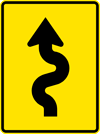 |
LEFT WINDING ROAD SIGN (PTC-WRL) (a) Justification. The Left Winding Road Sign (PTC-WRL) shall be authorized for use where there is a series of turns or curves as defined in the warrants for Curve (W1-2L) signs when the first turn or curve is to the left. The PTC-WRL sign shall be used in accordance with MUTCD Chapter 2C Warning Signs. (b) Placement. This sign should be erected for narrow medians where the total width of the median is less than 15 feet. |
|
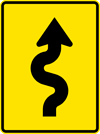 |
RIGHT WINDING ROAD SIGN (PTC-WRR) (a) Justification. The Right Winding Road Sign (PTC-WRR) shall be authorized for use where there is a series of turns or curves as defined in the warrants for Curve (W1-2R) signs when the first turn or curve is to the right. The PTC-WRR sign shall be used in accordance with MUTCD Chapter 2C Warning Signs. (b) Placement. This sign should be erected for narrow medians where the total width of the median is less than 15 feet. |
|
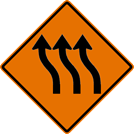 |
THREE-LANE LEFT REVERSE CURVE SIGN (W1-4CL) The Three-Lane Left Reverse Curve Sign (W1-4CL) may be used where three lanes of traffic traveling in the same direction have a curve first to the left and then to the right as defined in the warrants for curve signs and the curves are separated by a tangent of less than 600 feet. |
|
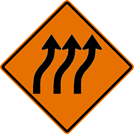 |
THREE-LANE RIGHT REVERSE CURVE SIGN (W1-4CR) The Three-Lane Right Reverse Curve Sign (W1-4CR) may be used where three lanes of traffic traveling in the same direction have a curve first to the right and then to the left as defined in the warrants for curve signs and the curves are separated by a tangent of less than 600 feet. |